
ISL Solfege: Ear Training · iOS 17+
Ear training app with a real course: 72 lessons from first notes to dictation
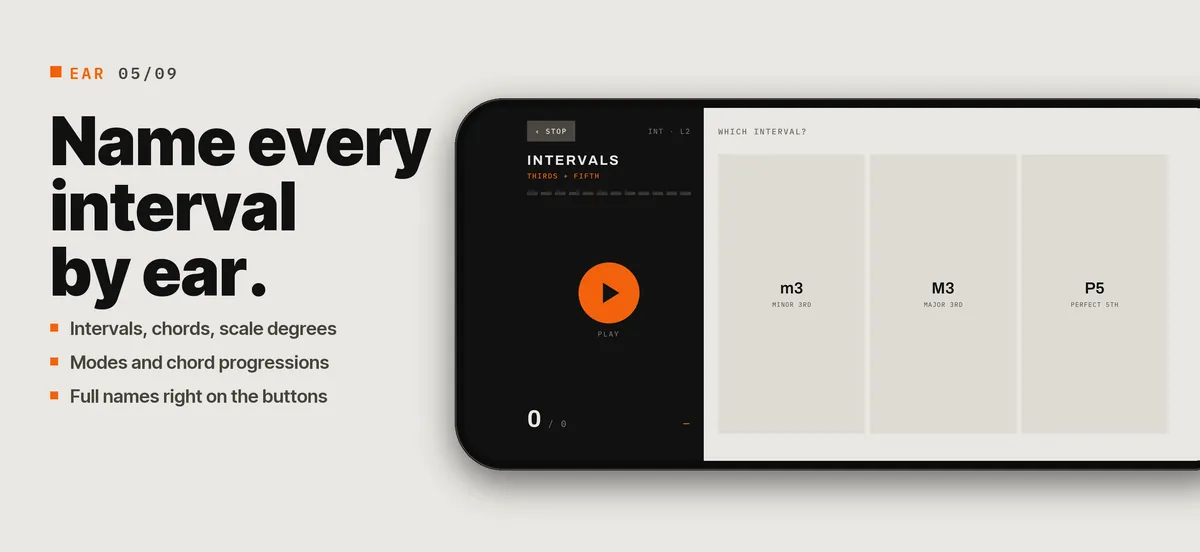
ISL Solfege is ear training and music theory for the self-taught musician: 72 lessons in 8 units, each with short theory pages, live examples and a trainer right inside the lesson. Exercises are generated endlessly; it works offline and needs no account.
Why ear training apps often stop helping
- You have tapped through a hundred interval quizzes, but you still cannot write down the tune you just heard.
- Most trainers are a pile of separate exercises with no order. You never know what to practise next or whether you are actually improving.
- Theory lives in a book and listening lives in an app, so what you read about never meets what you hear.
- Rhythm tests that ignore Bluetooth delay mark correct taps as wrong, and after a skipped week it is hard to start again.
How ISL Solfege trains your ear
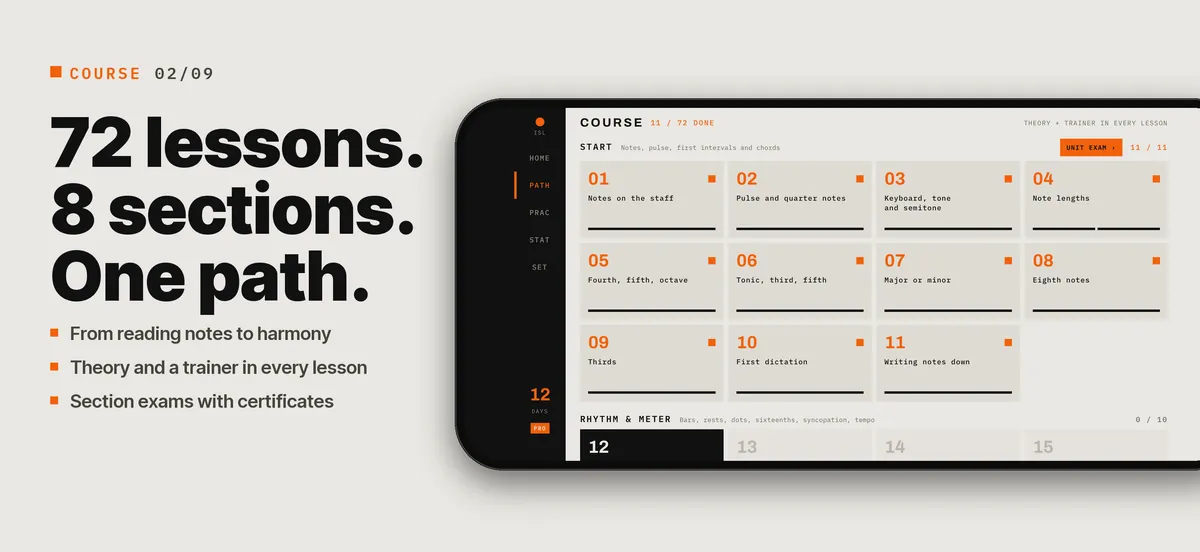
A course, not a quiz pile
72 lessons in 8 units: Start, Rhythm and meter, Intervals, Scales and keys, Chords and harmony, Melody and writing, Guitar and drums, and a final. Lessons open in order inside each unit; a step is passed with 4 of 5 tasks right, and every opened level stays in free practice.
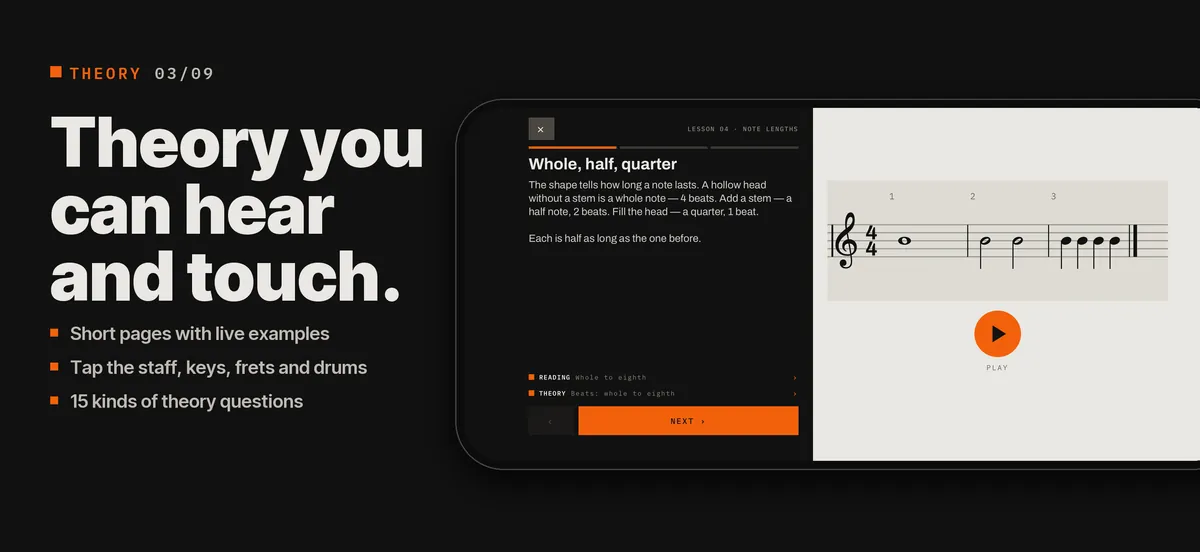
Theory inside every lesson
Short pages with live examples: press keys and frets and watch the notes appear on the staff, play intervals, chords, scales and tempos. Theory questions then check that you can read it too: note names, key signatures, intervals on the staff, chord formulas, tempo terms.
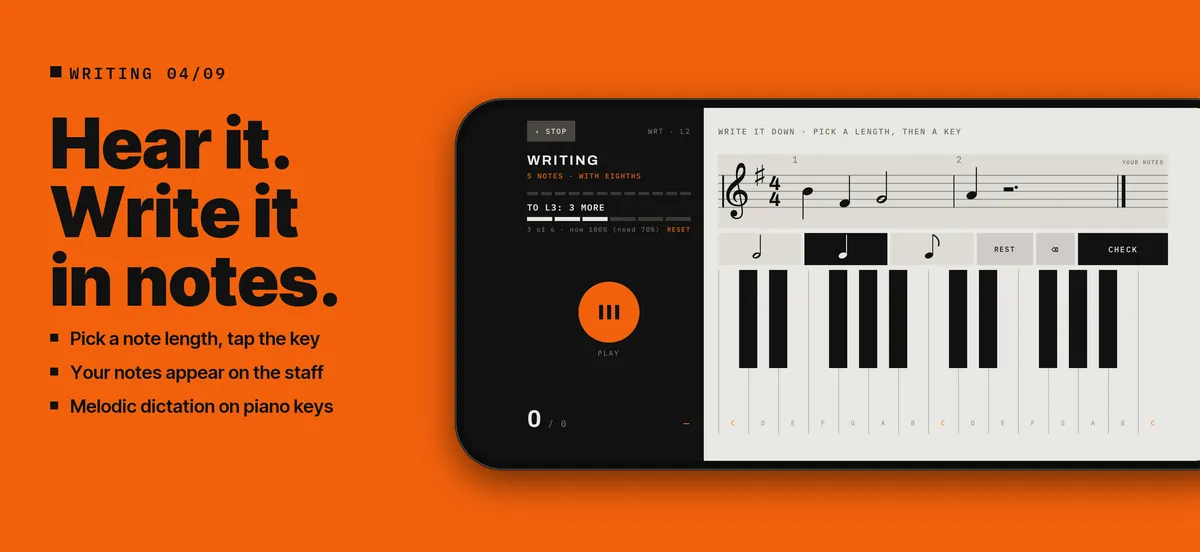
Write what you hear
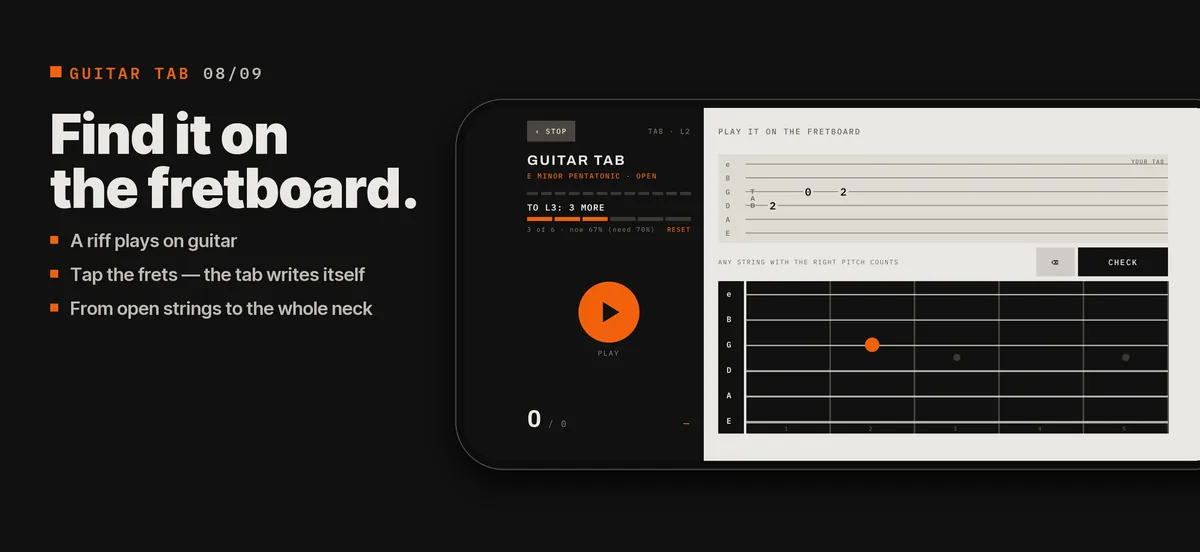
Melodic dictation on piano keys with the first note given, writing a melody on the staff with real note lengths, guitar tab on a fretboard and drum beats on a grid of kick, snare and hi-hat.
Rhythm that is judged fairly
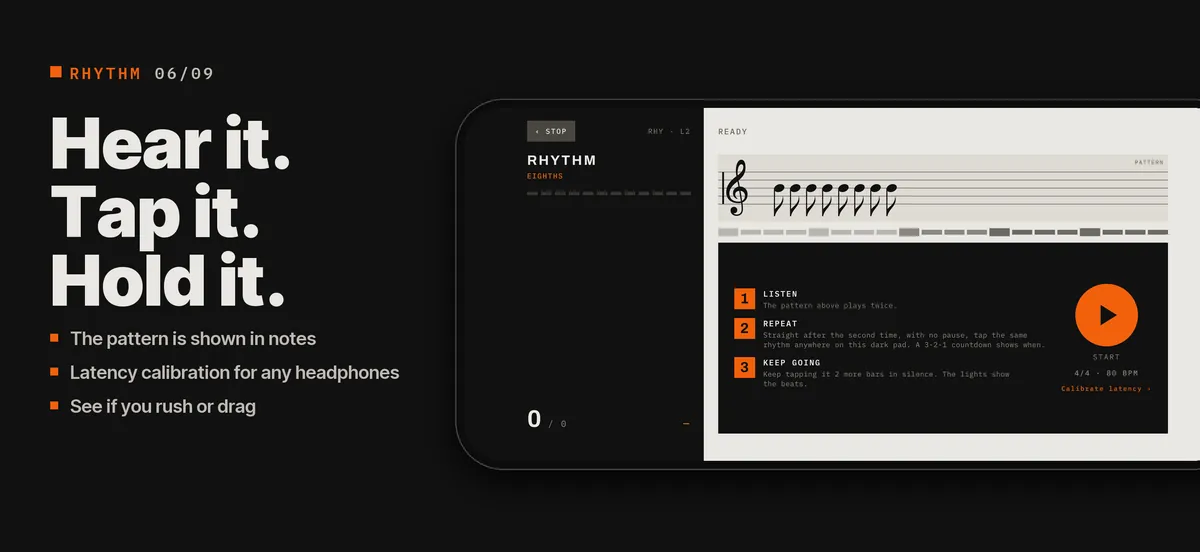
Tap a pattern back, then keep it going without the click. Latency is calibrated separately for the speaker, wired and Bluetooth headphones, and the report shows whether you rush or drag.
Endless generated exercises
Melodies, rhythms and chords follow music-theory rules: melodies end on the tonic, a leap is followed by a step back, bars are filled exactly. You do not run out of new tasks.
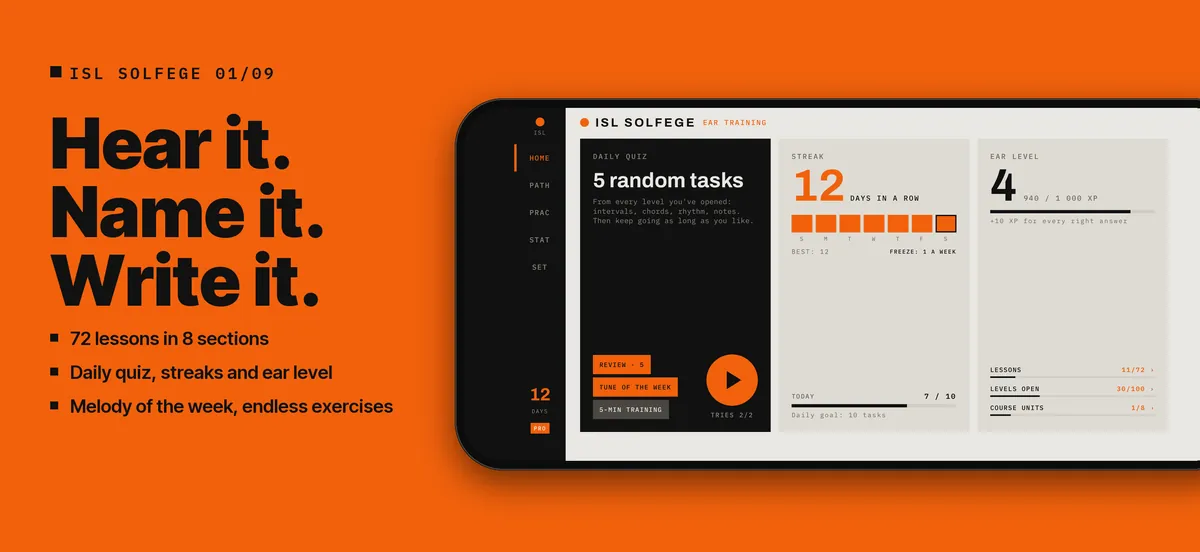
A daily quiz and a streak
Five random tasks from every level you have opened, two tries a day. A daily goal of 10 tasks, +10 XP for each right answer, an ear level, your streak and best streak, and an optional reminder at a time you choose that stays quiet if you have already practised.
Free start, Pro for everything
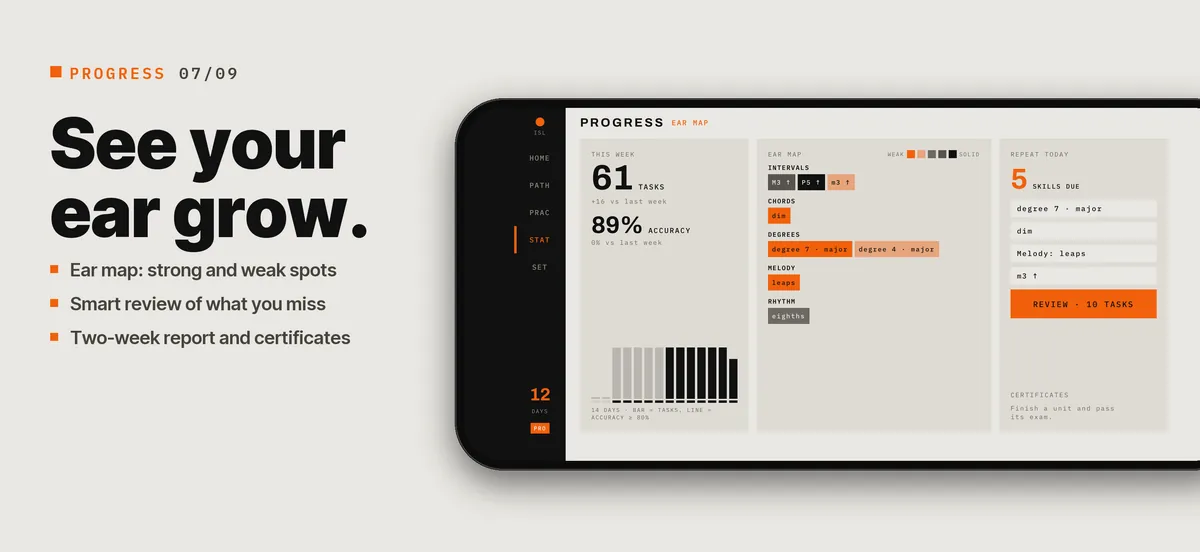
Free: the whole first unit of 11 lessons (the staff, pulse, the keyboard, note lengths, first intervals and chords, first dictation and writing), the first levels of the core modes, the daily quiz and up to 15 tasks a day. ISL Solfege Pro ($0.99 a month or $9.99 a year) removes the daily limit and opens all 72 lessons in any order, plus harmony, modes, cadences, tempo, guitar tab and drums, smart review with an ear map and a two-week report, your own trainer, unit exams with certificates, a tune of the week, guitar and organ sounds, a streak freeze and the 5-minute daily training.
App StoreIn App Store review — available soonFrequently asked questions
Can you really train your ear as an adult?
Yes. Relative pitch, recognising intervals, chords and scale degrees, is a skill that improves with regular short practice at any age. Ten minutes a day on a structured course works better than long irregular sessions.
Where does the course start?
With notes on the staff, a steady pulse, the keyboard and note lengths. Then come the fifth, the tonic triad in a key, major versus minor chords, eighth notes, thirds, a first melodic dictation and a first melody written in notes. That whole first unit is free.
What is melodic dictation?
You hear a short melody and write it down. In ISL Solfege you play it back on piano keys or write it on the staff with note lengths. The first note is given, and after checking you hear the correct version.
Do I need to read music to start?
No. The first lessons explain the staff, clefs and note lengths with interactive examples, and reading and theory questions let you practise them until they stick.
Can I use Do Re Mi instead of C D E?
Yes. Note names can be shown as Do Re Mi, C D E or C D H, and scale-degree buttons as numbers or as do-re-mi syllables counted from the key note.
Why does the app ask me to calibrate?
Headphones, especially Bluetooth, play sound a little late. You tap 16 clicks once per output, and rhythm exercises then judge your taps fairly. The calibration is stored for each output separately.
Is it useful for guitarists and drummers?
Yes. The Guitar and drums unit covers tab, the fretboard and drum notation: you hear a melody on guitar and find it on the fretboard, or hear a beat and place kick, snare and hi-hat on a grid.
Does it work offline? Which devices?
It works fully offline, has no account and your progress stays on your device. It runs on iPhone and iPad with iOS 17 or later, in landscape, which gives the keyboard and fretboard more room.
Guides and articles
How to learn intervals by ear: reference songs, drills and a practice order
Start with reference songs to give each interval a name you can hear, drill a few intervals at a time in ascending, descending and harmonic form, then move on to hearing them inside a key. Five to ten minutes a day is enough to notice progress within weeks.
Read →How to do melodic dictation: a step-by-step method
Melodic dictation is writing down a melody you hear. Fix the key and the first note, use the first listen for shape and memory, then capture the rhythm and the pitches as scale degrees, and finish by singing your answer back against the melody.
Read →Movable do vs fixed do: solfège explained simply
In fixed do, “do” always means the note C. In movable do, “do” means the tonic of whatever key you are in, so the syllables name scale degrees. Fixed do is a way of naming notes; movable do is a way of hearing how notes function in a key.
Read →More apps

ISL: Looper & Song Sketches
8-track looper, guitar, accordion, pads, notes by ear, MIDI export

Sin Tracker
Seven sins, one calendar, zero motivational quotes

Honestly
510 questions, party mode with dares and AI questions

Orbita
Measure a ring on screen: US, UK, EU, JP sizes, offline

iKlyukalo
Joke clicker: Dynamic Island, achievements, Game Center

Trichrome
Nine colour puzzles: hidden numbers, hue order, gap ring